

Let's look at the water and wine at Cana, following the story through what the Bible actually tells us, as against what we think we know. What was a very straightforward event is now dubbed with supernatural overtones. The Cana wedding, out of four Gospels, is described only in John. If it was so important to the Church as a miracle, why is it not in the other three Gospels? It does not say (as is so often said from pulpits): "They ran out of wine." It doesn't say that. It says: "When they wanted wine, the mother of Jesus said, 'They have no wine.'"
The Gospel tells us that the person in charge was the ruler of the feast. This specifically defines it not as a wedding ceremony as such, but a pre-wedding betrothal feast. The wine taken at betrothal feasts was only available to priests and celibate Jews, not to married men, novices or any others who were regarded as being unsanctified. They were allowed only water-a purification ritual, as stated in John.
When the time came for this ritual, Mary, clearly not happy about the discrimination and directing Jesus' attention to the unsanctified guests, said: "They have no wine." Having not yet been anointed to Messiah status, Jesus responded: "Mine hour is not yet come." At this, Mary forced the issue and Jesus then flouted convention, abandoning water altogether. Wine for everyone! The ruler of the feast made no comment whatsoever about any miracle; he simply expressed his amazement that the wine had turned up at that stage of the proceedings.
It's been suggested often that the wedding at Cana was Jesus' own
wedding ceremony because he and his mother displayed a right of command that would not be associated with ordinary guests. However, this feast can be dated to the summer of AD 30, in the month equivalent to June. First weddings were always held in the month of Atonement (September), and betrothal feasts were held three months before that. In this instance, we find that the first marital anointing of Jesus by Mary Magdalene was at the Atonement of AD 30, three months after the Cana ceremony which appears to have been their own betrothal feast.
The Gospels tell a story that although not always in agreement from Gospel to Gospel is actually followable outside the Bible. The accounts of Jesus' activities right up to the time of the Crucifixion can be found in various records of the era. In the official annals of Imperial Rome, the trial by Pilate and the Crucifixion are mentioned. We can determine precisely from this chronological diary of the Roman governors that the Crucifixion took place at the March Passover of AD 33. The Bethany second marriage anointing was in the week prior to that. We know
that at that stage Mary Magdalene had to have been three months
pregnant, by law-which means she should have given birth in September of AD 33. That, we'll come back to.
If the Gospels are read as they are written, Jesus appears as a
liberating dynast, endeavouring to unite the people of the era against the oppression of the Roman Empire. Judaea at the time was just like France under German occupation in World War II. The authorities were controlled by the military occupational force; resistance movements were common.
Jesus was awaited, expected, and by the end of the story had become an anointed Messiah. In the first century Antiquities of the Jews, Jesus is called "a wise man", "a teacher" and "the King". There is nothing there about divinity.
While the Dead Sea Scrolls identify the Messiah of Israel as the Supreme Military Commander of Israel, it is no secret the apostles were armed. From the time of recruitment, Jesus checked that they all had swords. At the very end of the story, Peter drew his sword against Malchus. Jesus said, "I come not to send peace but a sword."
Many of the high-ranking Jews in Jerusalem were quite content to hold positions of power backed by a foreign military regime. Apart from that, the Hebrew groups themselves were sectarian; they did not want to share their God Jehovah with anybody else, specifically unclean Gentiles. To the Pharisees and Sadducees, the Jews were God's chosen people: He belonged to them, they belonged to Him. But there were other Jews-there were the Nazarenes, there were the Essenes-who were influenced by a more
liberal, western doctrine. In the event, Jesus' mission failed; the rift was insurmountable. Gentiles, in modern-day language, are simply the non-Jewish Arab races-and the rift is still there today.
The sentencing of Jesus was by the Roman Governor Pontius Pilate, but Jesus was actually condemned and excommunicated prior to that by the Sanhedrin Council. It was decided to contrive a punishment, whereby Jesus would be sentenced by the Roman Governor who was already trying other prisoners for leading insurrections against himself.
As confirmed by the Supreme Judge and Attorney-General of Israel even today, it was quite illegal for the Sanhedrin Council to sit at night or to sit and operate during the Passover, so the timing was perfect. They had an ideal opportunity, and a reason to say: "Sorry, we can't do this ourselves. You, the Roman Governor, have to do this."
As for Jesus' death on the Cross, it is perfectly plain this was
spiritual death, not physical death, as determined by the three-day rule that everybody in the first century reading this would have understood. In civil and legal terms, Jesus was already dead when he was placed on the Cross. He was denounced, scourged, prepared for death by decree. Today, we call this "excommunication". For three days Jesus would have been nominally sick, with absolute death coming on the fourth day. On that day he would be entombed, buried alive; but during the first three
days he could be raised or resurrected. In fact, he predicted that he would.
Raisings and resurrections (apart from the fact that Jesus once flouted the rule, and that was a miracle!) could only be performed by the High Priest or by the Father of the Community. The High Priest at that time was Joseph Caiaphas, the very man who condemned Jesus; therefore the raising had to be performed by the patriarchal Father. There are Gospel accounts of Jesus talking to the Father from the Cross, culminating in "Father, into thy hands I commend my spirit", and at that time we know
from the listings that the appointed Father was the Magian apostle Simon Zelotes.
We have been taught that Jesus' physical death was proved by the blood and water that flowed when he was pierced by the spear, but this has been very badly translated. The original word does not translate to "pierced"; it translates to "pricked" or to "scratched". This in turn was mistranslated into the Latin verb "to open", and into the English word "pierced".
They were not primitive times. They were times when there were doctors, medical men; there were even forms of hospital. And we can see that, just like today, the test for reflex action was scratching, prodding or pricking the skin with a sharp instrument.
I have in my possession a letter from a surgeon of the British Medical Council. It says: "Medically, the outflow of water is impossible to explain. Blood flowing from a stab wound is evidence of life, not death. It would take a large, gaping laceration for any drop of blood to flow from a dead body because there is no vascular action."
So let's look further; let's look at what the Gospels actually said. Joseph of Arimathea took down Jesus' body from the Cross. In fact, the word that was translated to the English word "body" was the Greek word soma, meaning "live body". The alternative word denoting "dead body" or "corpse" would have been ptoma.
Jesus very apparently survived, and this is explicitly maintained in other books. Even the Koran says that Jesus survived the Crucifixion.
During that Friday afternoon when Jesus was on the Cross, there was a three-hour-forward time change. Time was recorded then by sundials and by priests who marked the hours by a sequence of measured prayer sessions. In essence, there were daytime hours and there were night-time hours. Today we have a twenty-four-hour day. In John, Jesus said: "Are there not twelve hours in a day?" Yes, there were twelve hours in a day and there were twelve hours in the night, and daytime started at sunrise. From time to time the beginning of daytime changed; thus the beginning of night-time changed. In March, the beginning of daytime
would have been somewhere round about six o'clock in the morning, as we know it.
We know that Joseph of Arimathea negotiated with Pontius Pilate to have Jesus removed from the Cross after a few hours of hanging. The Gospels don't actually agree on the sequence of events here: some use the time before the time change; some use the time after the time change. But three hours disappeared from the day, to be replaced with three night-time hours. Daylight hours were substituted by hours of darkness. The land fell into darkness for three hours, we are told in the Gospels.
Today we would simply, in a split second, add three night-time hours to the day.
But these three hours were the crux of every single event that followed, because the Hebrew lunarists made their change during the daytime. The solarists, of which the Essenes and the Magi were factions, did not make their change until midnight-which actually means that according to the Gospel that relates to Hebrew time, Jesus was crucified at the third hour; but in the other, solar time he was crucified at the sixth hour.
On that evening the Hebrews began their Sabbath at the old nine o'clock, but the Essenes and Magians still had three hours to go before the Sabbath. It was those three hours that enabled them to work with, on and for Jesus, during a period of time in which nobody else was allowed to undertake any physical work whatsoever.
And so we come to probably one of the most misunderstood events of the Bible, and from there we'll move on, beyond the Bible period through history, to tell what happened concerning the birth of Jesus and Mary's child in September AD 33. One of the most misunderstood events in the Bible is the Ascension, and in discussing it we will consider the births of Jesus' three children and their descendants.
So, what do the Gospels tell us about events in September AD 33? In fact, the Gospels tell us nothing, but the story is taken up in The Acts of the Apostles which detail for September the event which we have come to know as "the Ascension".
The one thing that the Acts do not do, however, is call the event "the Ascension". This was a name given to the ritual when the Roman Church doctrines were established over three centuries later. What the text actually says is: "And when he had spoken these things...he was taken up, and a cloud received him out of their sight." It then continues that "a man in white" said to the disciples: "Why stand ye gazing up into heaven? This same Jesus...shall so come in like manner as ye have seen him go." Then, a little later in the Acts, it says that "heaven" must
receive Jesus until "the time of restitution".
Given that this was the very month in which Mary Magdalene's child was due, is there perhaps some connection between Mary's confinement and the so-called Ascension? There certainly is, and the connection is made by virtue of the time of restitution.
Not only were there rules to govern the marriage ceremony of a Messianic heir, but so too were there rules to govern the marriage itself. The rules of dynastic wedlock were quite unlike the Jewish family norm, and Messianic parents were formally separated at the birth of a child. Even prior to this, intimacy between a dynastic husband and wife was only allowed in December, so that births of heirs would always fall in the month of September-the month of Atonement, the holiest month of the
Jewish calendar.
Indeed, it was this very rule which Jesus's own parents (Joseph and Mary) had themselves broken. And this was the reason why the Jews were split in opinion as to whether Jesus was, in fact, their true Messiah.
When a dynastic child was conceived at the wrong time of year, the mother was generally placed in monastic custody for the birth so as to avoid public embarrassment. This was called being "put away privily", and Matthew states quite plainly that when Mary's pregnancy was discovered, "Joseph, her husband, being a just man and not willing to make her a public example, was minded to put her away privily".
In this instance, special dispensation for the birth was granted by the archangel Simeon who at that time held the distinction of "Gabriel", being the angelic priest in charge. Both the Dead Sea Scrolls and the Book of Enoch (which was excluded from the Old Testament) detail that the "archangels" (or chief ambassadors) were the senior priests at Qumran, retaining the traditional titles of "Michael", "Gabriel", "Raphael", "Sariel", etc.
In the case of Jesus and Mary Magdalene, however, the rules of wedlock had been obeyed to the letter, and their first child was properly conceived in December AD 32, to be born in September AD 33.
From the moment of a dynastic birth, the parents were physically
separated-for six years if the child was a boy, and for three years if the child was a girl. Their marriage would only be recommenced at the designated time of restitution. Meanwhile, the mother and child would enter the equivalent of a convent, and the father would enter "the Kingdom of Heaven". This Kingdom of Heaven was actually the Essene High Monastery at Mird, by the Dead Sea, and the ceremony of entry was conducted by the angelic priests under the supervision of the appointed Leader of the Pilgrims.
In the Old Testament book of Exodus, the Israelite pilgrims were led into the Holy Land by a "cloud"-and in accordance with this continued Exodus imagery, the priestly Leader of the Pilgrims was designated with the title "Cloud".
So, if we now read the Acts verses as they were intended to be
understood, we see that Jesus was taken up by the Cloud (the Leader of the Pilgrims) to the Kingdom of Heaven (the High Monastery). And the man in white (an angelic priest) said that Jesus would return at the time of restitution (when his Earthly marriage was restored).
If we now look at St Paul's Epistle to the Hebrews we discover that he explains the said Ascension event in some greater detail, for Paul tells of how Jesus was admitted to the Priesthood of Heaven when he actually had no entitlement to such a sacred office. He explains that Jesus was born (through his father Joseph) into the Davidic line of Judah-a line which held the right of kingship but had no right to priesthood, for this was the sole prerogative of the line of Aaron and Levi.
But, says Paul, a special dispensation was granted, and he tells that "for the priesthood being changed, there is made of necessity a change also of the law". As a result of this express "change of the law", it is explained that Jesus was enabled to enter the Kingdom of Heaven in the priestly Order of Melchizedek.
So, in September AD 33, the first child of Jesus and Mary Magdalene was born, and Jesus duly entered the Kingdom of Heaven. There is no reference to this child being a son (as there is for the two subsequent births), and given that Jesus returned three years later, in AD 36, we know that Mary must have had a daughter.
By following the chronology of the Acts, we see that in September AD 37 a second child was born; and then another in AD 44. The period between these two births to the second restitution in AD 43 was "six years", which denotes that the AD 37 child was a son. This fact is also conveyed by the use of cryptic wording-the same cryptic wording afforded to the AD 44 child-so we know that this third child was also a son.
In accordance with the scribal codes detailed in the Dead Sea Scrolls, everything cryptic within the New Testament is set up beforehand by some other entry which explains that the inherent message is "for those with ears to hear". Once these codes and allegories are understood, they never ever vary. They mean the same thing every time they are used, and they are used every time that same meaning is required.
For example, the Gospels explain that Jesus was called "the Word of God": "And the Word was made flesh, and dwelt among us...full of grace and truth." John goes to great lengths to explain the relevance of this definition, and subsequent entries give details such as "the Word of God stood by the lake" and "the Word of God was in Samaria".
Messages conveying information about fertility and new life are
established in the Parable of the Sower whose seed "bore fruit and increased". Thus, when it is said that "the Word of God increased", "those with ears to hear" would recognise at once that "Jesus increased"-that is to say, he had a son. There are two such entries in the Acts, and they fall precisely on cue in AD 37 and AD 44.
Probably the most misrepresented book of the New Testament is The Book of The Revelation of St John the Divine-misrepresented by the Church, that is; not by the book itself. This book is quite unlike any other in the Bible. It is dubbed with terrible supernatural overtones, and its straightforward imagery has been savagely corrupted by the Church to present the text as some form of foreboding or prophecy of warning! But the book is not called "The Prophecy" or "The Warning". It is called "The Revelation".
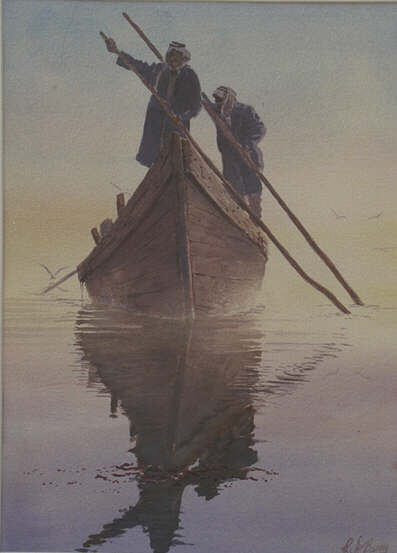
As we saw earlier, ordained priests of the era were called "fishers"; their helpers were called "fishermen", and baptismal candidates were called "fishes". Jesus became an ordained fisher when he entered the Kingdom of Heaven, but until that time (as explained by St Paul) he held no priestly office.
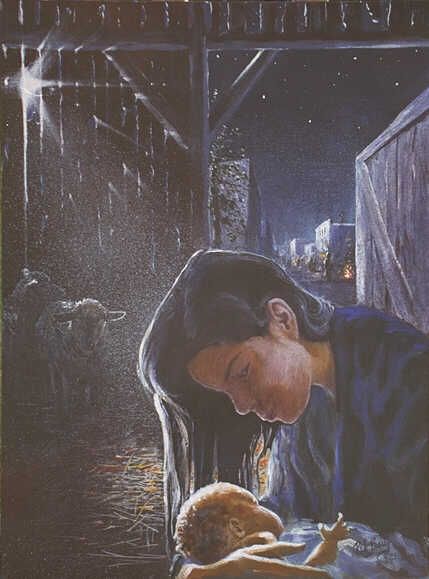
We know from the Gospel chronology that the Bethany second-marriage anointing of Jesus by Mary Magdalene was in the week before the Crucifixion. And we know that at that stage Mary was three-months pregnant and therefore should have given birth in the following September.
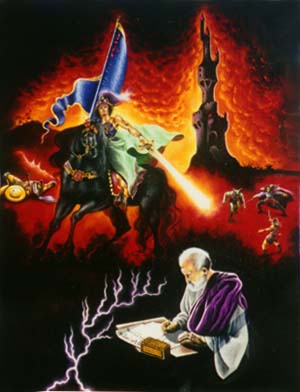
So, what does the book reveal? Chronologically, its story follows The Acts of the Apostles, and the Book of The Revelation is, in fact, the continuing story of Jesus, Mary Magdalene and their sons, particularly the elder son, Jesus Justus. It follows his life and details his marriage, along with the birth of his own son. This much-misunderstood New Testament book is not a foreboding or a warning as the fearful Church would have us believe. It is precisely what it says it is: a revelation.
